
SPOT Project update: September 2025
CONTINUED SUPPORT OF THE COMMUNITY CENTRE
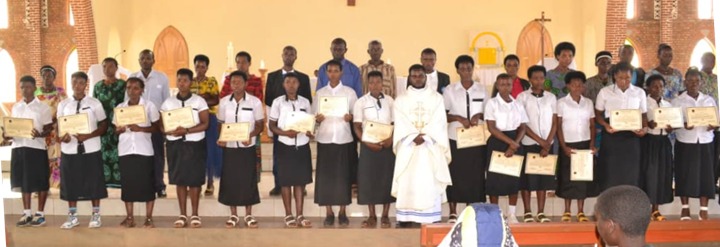
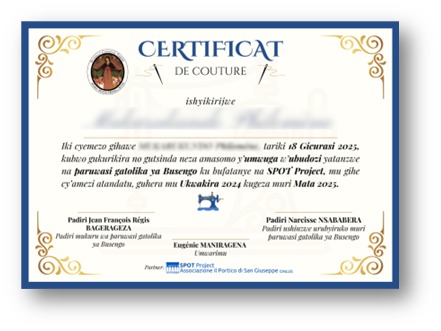
The SPOT project has continued to grow its activities in Busengo, Rwanda in 2025. In particular, the first cohort of 20 young women attending the tailoring workshop completed their training successfully. The first graduates received their diploma during the parish Mass on 18 May 2025. Below is an image of the graduating class and of the diploma issued.
Building on this first important achievement, SPOT has been focusing on helping graduates begin earning an income using their newly acquired skills. To support this goal, the project has purchased five additional sewing machines to better equip the workshop. This allows graduates to access the machines on a rotational basis while, at the same time, enabling the launch of a new tailoring cohort.
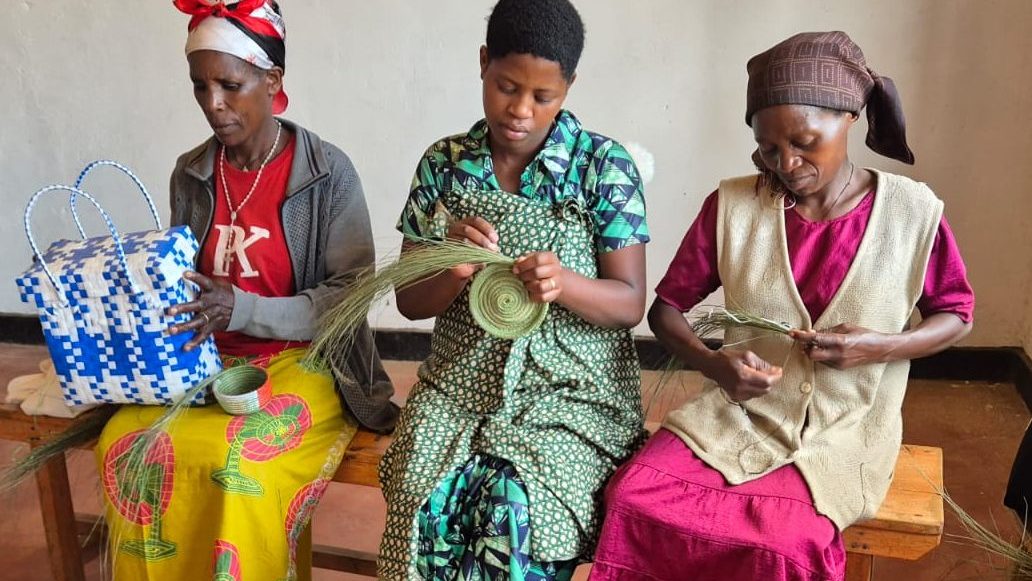
In 2025 the SPOT project also hosted a weaving course for women at the Community Centre. A total of 33 young women completed the course and are now able to produce a vast range of products.
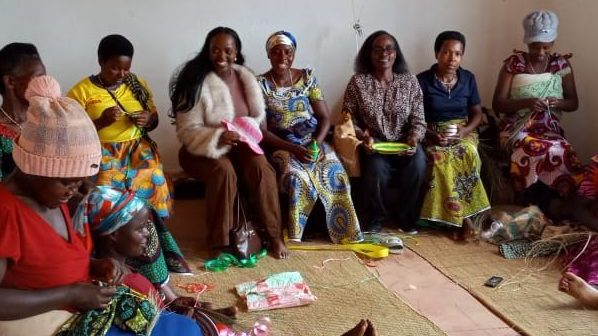
Building on the success of the first cohort, the SPOT Community Centre opened its doors to a second cohort of woman attending the tailoring workshop in August 2025. A total of 11 women are participating in the second cohort.
CONTINUED SUPPORT OF SCHOOL SCHOLARSHIPS
A project delegation visited the community of Busengo several times between August and September 2025, meeting the parish priest Father François Régis BAGERAGEZA, the assistant parish priest Father Narcisse NSABABERA, and some local leaders. During these meetings, they discussed the criteria for awarding scholarships to prevent school drop-out, which the community would like to link, at least for older students, also to merit. Based on this exchange, the scholarships for the new school year have already been disbursed, supporting 80 female and male students.
NEXT STEPS FOR SPOT
However, the SPOT project needs to expand and, to do so, it requires management and coordination tools that are more effective and better integrated into the daily life of the community. Two significant initiatives have therefore been launched.
The first initiative was a two-month assignment (August-September) in Rwanda for Ms. Esther Uwimbabazi, who is Rwandan by origin and based in Italy, and holds a Master’s degree in International Business and Development. Her role was to work closely with the local community, observe local dynamics, and assess the feasibility of establishing a women’s cooperative to support the training centre’s activities through the marketing and sale of locally made products. Ester provided a bridge between different cultural contexts, and provided valuable insights to guide the project’s future development. Her personal account follows below.
The second initiative is the appointment of Ms. Domina Hakuzimana , a social science expert in Rwanda, as SPOT Operations Director. She is responsible for coordinating all SPOT activities and maintaining ongoing dialogue with the local community.
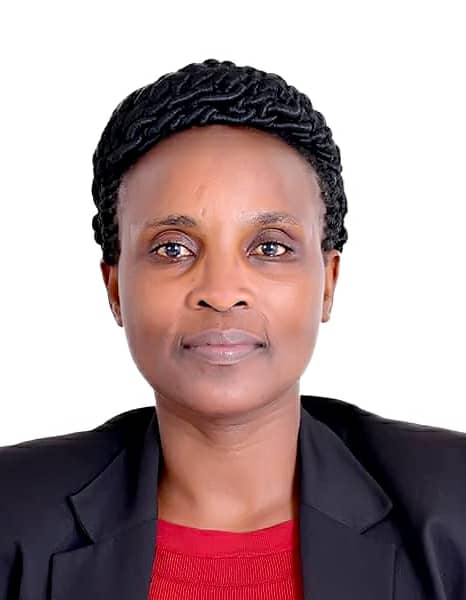
The SPOT Team extend our warm wishes to Dominia for her work and our gratitude for her availability to support our activities.
TESTAMENT FROM Ms. Esther Uwimbabazi
Empowering Rural Women in Rwanda: Reflections from My Journey with the SPOT Project
My name is Esther Uwimbabazi, a 27-year-old Rwandan woman passionate about empowerment, inclusion, and community-driven development. Growing up with a physical mobility disability shaped much of my worldview. It taught me resilience, empathy, and the importance of helping others discover their inner strength. As a child, I dreamed of becoming a fashion designer or a beauty aesthetician, believing that beauty—both internal and external—has the power to restore confidence. Over time, this dream transformed into a broader commitment to uplift others, especially women who often face socioeconomic and cultural barriers.
My academic journey began in Rwanda, where I had the privilege of completing all my levels of education. I later enrolled at INES Ruhengeri (Institut d’Enseignement Supérieur de Ruhengeri), pursuing a Bachelor’s degree in Applied Economics with a specialization in Rural Development. During my studies, I learned about the complexities of rural livelihoods, gender inequalities, and the transformative impact of community-centered initiatives. These foundations prepared me for a remarkable chapter in my life.
After graduating, I received an extraordinary opportunity to pursue a Master’s degree in International Business and Development at the University of Parma in Italy. This moment brought excitement, nervousness, curiosity, and hope. Moving abroad represented not only a personal achievement but also a significant responsibility—to acquire knowledge that I would one day bring back to support my home country. I successfully completed my Master’s program on March 17, 2025, after two years filled with academic rigor, cultural experiences, personal growth, and unforgettable friendships.
After graduating, I was given the opportunity from the SPOT project, allowing me to apply both my theoretical and practical skills to a real-world challenge that deeply aligned with my passions: empowering rural women.
I was assigned to study the socioeconomic development model associated with the Busengo training center, developed within the SPOT project. My role was similar to an internship, running from August 1st to September 30th, 2025. It involved conducting local analyses, engaging in field interviews, documenting community progress, and supporting the creation of final project reports.
The experience was transformative. At Busengo, I met women of diverse ages—some young, others the age of my mother. Their energy, solidarity, and determination deeply moved me. Historically, women in many rural Rwandan communities had limited involvement in leadership or economic activities. Many felt isolated, undervalued, or without opportunities for self-development. Yet through the Busengo initiative, new possibilities began to emerge.
One woman shared a Rwandan proverb that stayed with me: “When people decide to be together, God comes to be with them.” She described her life before joining the group as lonely and stagnant—filled with struggles she faced in silence. Today, she prays with friends, shares challenges, receives advice, and experiences a renewed sense of purpose. Many other women echoed similar stories. They spoke about personal transformation, emotional healing, and the strength they found through unity.
As trust grew, the women began to share deeper insights into their struggles. Most challenges centered around income, household responsibilities, education for their children, and the cost of basic needs. Many households faced financial instability, yet the project was slowly creating positive change.
Several women proudly explained that their children now have scholarships, access to school materials, and improved living conditions—relieving financial stress and offering renewed hope for the future.
The training center in Busengo provides multiple skill-building programs, including sewing, tailoring, and traditional handcraft production. The women learn to create beautifully woven baskets, fabric decorations, handbags, clothing, and other made-in-Rwanda products. With materials, guidance, and facilitators, the first and second cohorts developed strong technical skills. They applied creativity, discipline, and teamwork in every lesson.
One of the most inspiring developments was the creation of a small saving saving group among the first cohort. Each member contributes 1,000 RWF (approximately 0,60 euro) weekly. This collective fund supports anyone facing emergencies, demonstrating strong social cohesion and mutual aid. However, challenges still exist. The first cohort struggles with access to equipment like sewing machines, as the second cohort now occupies most of the available machines. Although temporary arrangements were made to alternate machine use, long-term solutions are needed to ensure sustainability and growth.
From my perspective, the women of Busengo are incredibly hardworking, passionate, and eager to improve their lives. They are hungry for progress, committed to learning, and ready to transform their community. What they need most now is continued support—mentorship, additional machines, stronger market access, and long-term capacity-building programs that will help them formalize their businesses and reach broader markets.
My time in Busengo reinforced my belief in the potential of rural development and women’s empowerment. It also highlighted the importance of combining theory with practice—something my academic background prepared me for. Witnessing real change in the lives of these women strengthened my commitment to serve Rwandan communities in meaningful ways.
This experience was not just a project. It was a journey of learning, connection, and purpose. It reminded me that true development begins with people—listening to them, understanding their stories, and walking beside them as they grow. And as I look toward the future, I am more inspired than ever to contribute to initiatives that empower women, reduce inequalities, and create pathways for sustainable development in Rwanda and beyond.
Ms. Esther Uwimbabazi
SPOT Project update: September 2024
A NEW COMMUNITY CENTER
Beyond education, we’ve also addressed a critical need in the community: a dedicated space for training and community activities. To empower the community, especially marginalized groups, we’ve established a new Community Training Center.
The SPOT project has completely revitalized the sewing workshop, providing a significantly enhanced learning environment. We’ve rented and secured a spacious 100-square-meter building dedicated solely to community training. This new space is equipped with state-of-the-art machinery, including 4 new mechanical sewing machines, an electric finishing machine, and a specialized machine for buttonholes and more complex stitches. By borrowing additional machines from a neighboring parish, we’ve created 10 well-equipped workstations. Each workstation is furnished with essential tools and a generous supply of colorful kitenge fabrics. A blackboard and television have been added to facilitate both learning and community engagement. The centre will provide training for local women, helping them develop valuable skills and generate income.


Thanks to a partnership with INES-Ruhengeri University and the European Erasmus+ project GREATER, the center is entirely self-sufficient, powered by solar panels. This makes it a “living lab” for students to learn about renewable energy and raises awareness among the community about sustainable practices.
GRAND OPENING
On Thursday, September 19th, the grand opening of the new “Community Training Center” (INZU Y’AMAHUGURWA in Kinyarwanda, the local language) was a resounding success. The event was attended by the District Mayor of Gakenke, the Rector of INES-Ruhengeri University, a representative of the Diocese, various local officials, and a large number of local residents. Approximately 200 people were present and toured the new center.
Just a few days later, the center launched its tailoring training program with the first group of 20 women, divided into two groups of 10. The training will last approximately 6 months, after which a new group can begin. The machines will remain available to the community, empowering trained women to start their own small cooperatives and contribute to the growth and sustainability of the project.
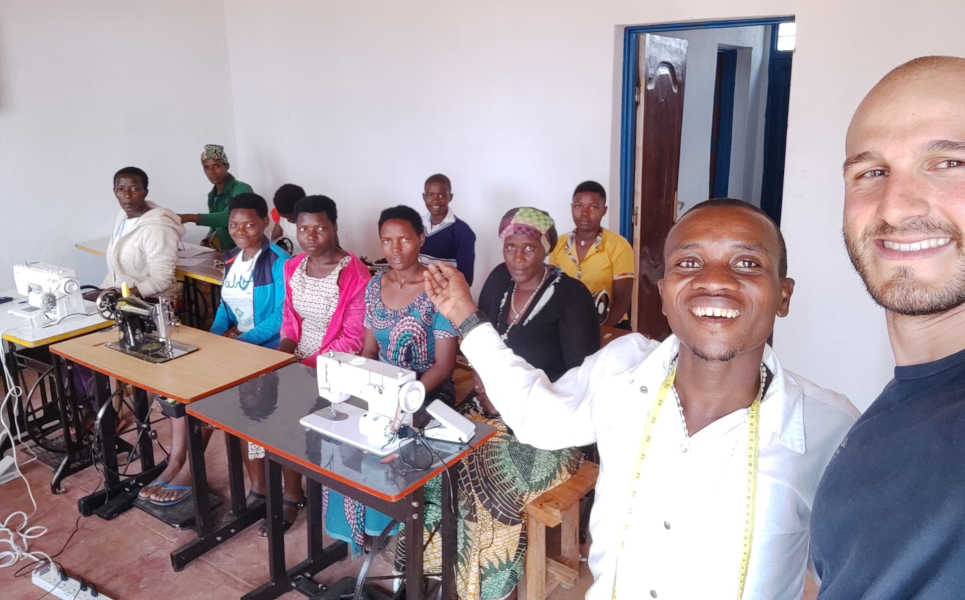
This was a significant milestone for our project. After an intense period of preparation, it allowed us to make a tangible demonstration of our solidarity with the community of Busengo. The center’s dedication to training activities is particularly meaningful to us, as it is a key element for the growth and empowerment of the population.
We extend our sincere gratitude to the Parish Priest, Father Règis, and the entire community for their support of the event. A special thanks goes to Mirco, Eraste, Viviane, and Aliane for their precious help.